
Shareholder Agreements
When two or more people own a business together, the most important document they can have is one that defines what happens when they disagree. A shareholder agreement — sometimes called a stockholders’ agreement — does exactly that. It governs the relationship between the owners of a corporation, addressing how decisions are made, what rights each shareholder has, and how ownership can be transferred when circumstances change.
One of the most valuable functions of a shareholder agreement is what is sometimes called a buy-sell provision. This is the mechanism that determines what happens to a shareholder’s ownership interest if they want to leave the business, if they pass away, if they become incapacitated, or if they simply can no longer work alongside the other owners. Without a buy-sell structure in place, a departing owner’s shares could end up in the hands of their estate, their former spouse after a divorce, or a third party the remaining owners never agreed to go into business with. A properly drafted buy-sell provision gives the business — and the remaining owners — a clear, pre-agreed path forward.

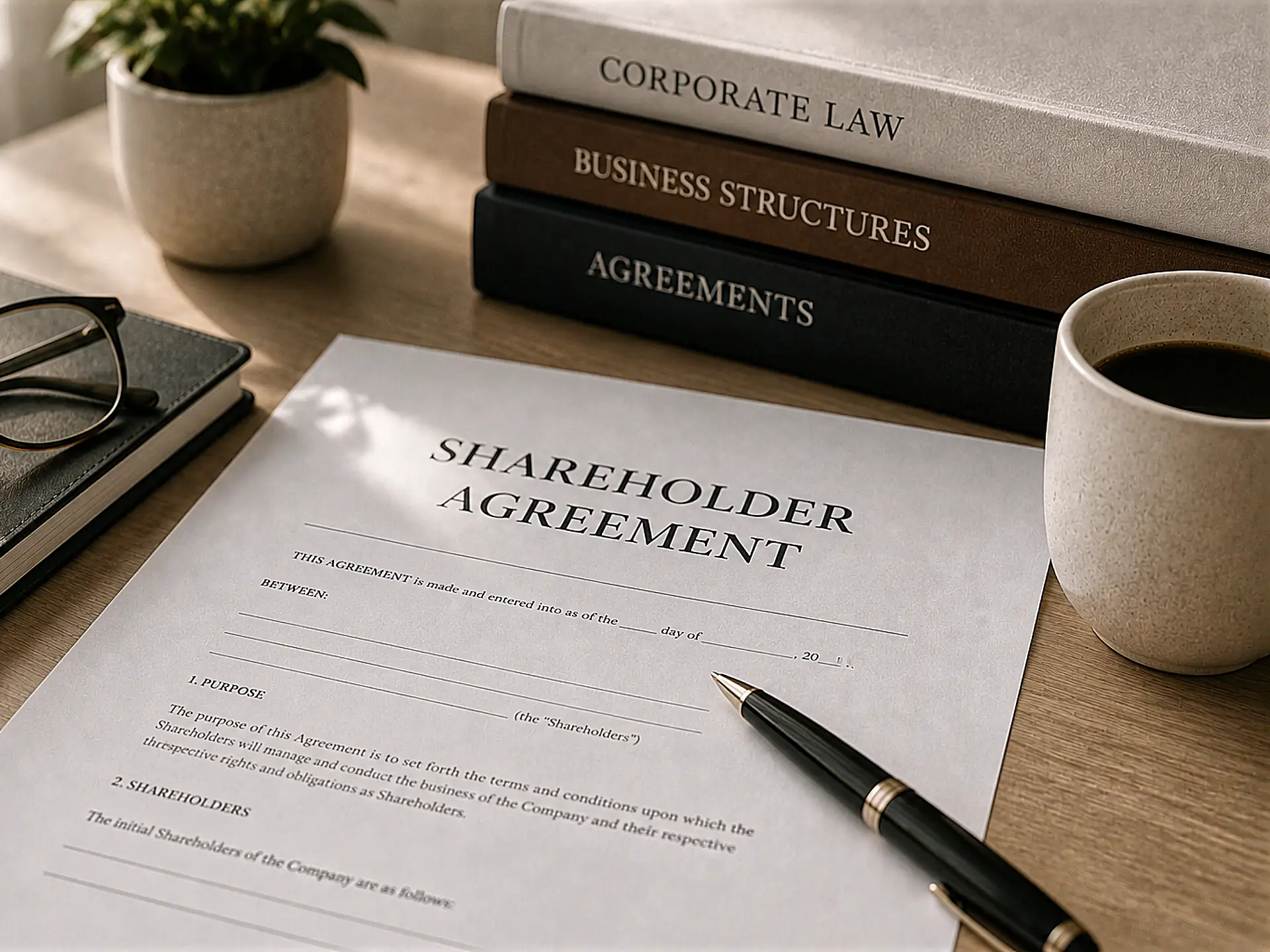
Shareholder agreements also address voting rights, dividend policies, restrictions on the transfer of shares, and what happens in the event the company is sold. These are not conversations most business partners want to have when things are going well — which is precisely when they should have them. Negotiating the terms of a business divorce is far easier before anyone is angry, before a deal is on the table, and before a dispute has made every conversation adversarial. If you have a business partner and you do not have a shareholder agreement, that is a gap worth addressing now.
Related FAQs
What is the difference between an LLC and a corporation?
Both structures provide liability protection that separates your personal assets from your business obligations, but they differ in how they are managed, how ownership is structured, and how they are treated for tax purposes. The right choice depends on your goals, how many people are involved, and your plans for the business — it is worth a conversation before you file anything.
Do I need an attorney if I am using a business broker?
You don’t need one, but it is recommended. A business broker helps identify buyers or sellers and facilitates the transaction. An attorney reviews and drafts the legal documents that govern the deal — the letter of intent, the purchase agreement, the closing documents, and any ancillary agreements. These are different and complementary roles.